
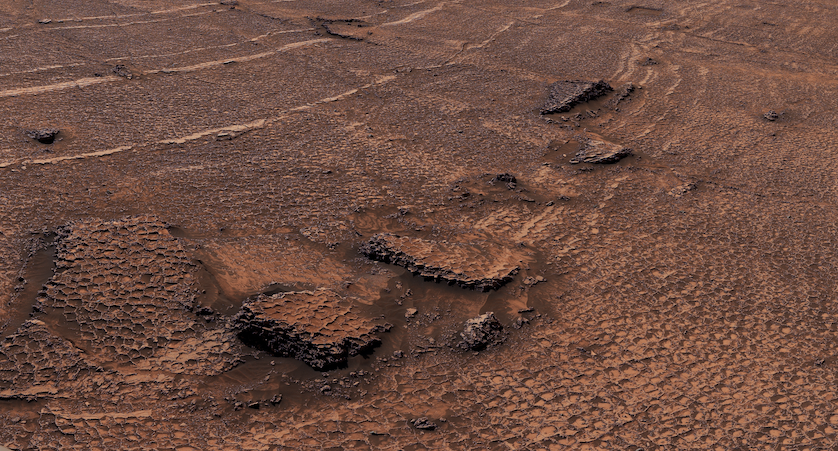
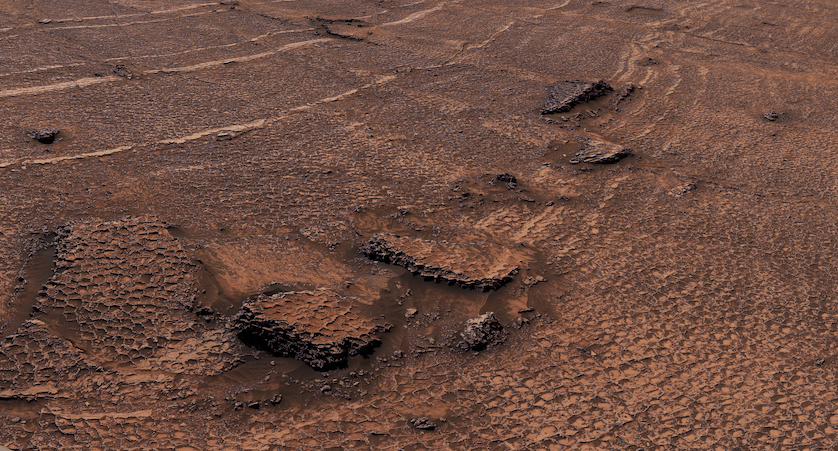
Credit: NASA/JPL-Caltech/MSSS
Curiosity rover spots field of giant honeycomb on Mars – but no giant space bees
NASA’s Curiosity rover just snapped a striking field of honeycomb textures on Mars, with each cell four to eight centimetres across. The team isn’t sure how the pattern formed, but experts think mud drying and cracking during an ancient Martian event is the likeliest cause. The discovery happens as Curiosity climbs Valle Grande, a Martian valley the team has dubbed a notable survey area. The rover captured the honeycomb on June 19–20 (Sol 4930–4931), part of its long-running mission. Since landing in 2012, Curiosity has travelled about 35 kilometres, offering clues that Mars once hosted intermittent oases or a lake. The mission has weathered tough times—damaged tires, a stuck drill—and keeps adapting, with software upgrades and occasional reprogramming enabling new experiments. Curiosity is now in its fifth extended mission, continuing as long as the data justifies the cost